Foundation repair cost in Las Vegas (2026): cracks, slab jacking and piers
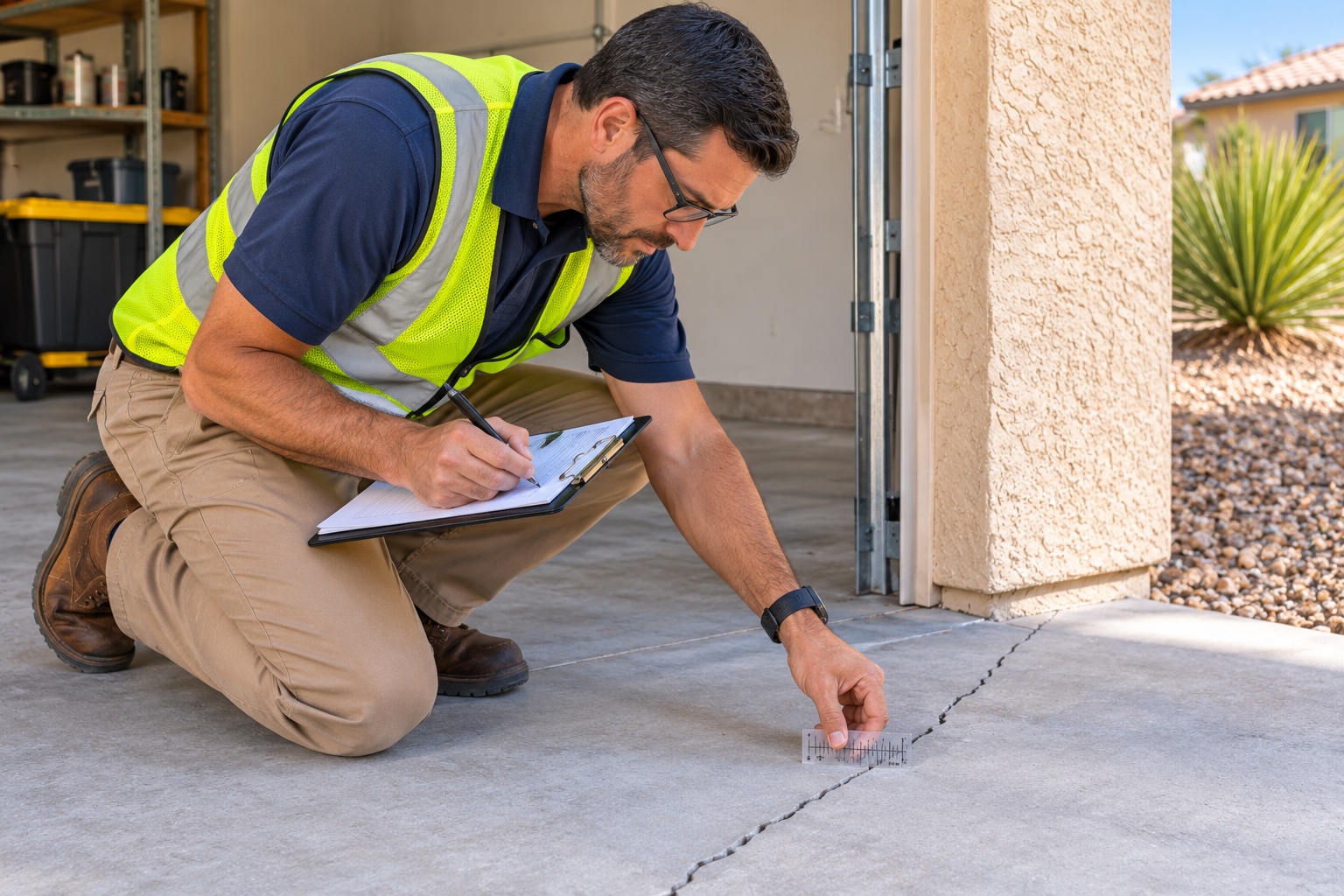
Foundation repair averages about $5,200, and most jobs run about $2,200 to $8,200. Crack repair runs about $200 to $1,000, slab jacking a smaller slab about $500 to $1,900, and piers about $1,000 to $3,000 each. Underpinning a whole home can run $10,000 to $40,000. Many cracks are cosmetic, so an independent assessment before you buy a repair can save thousands.
Typical prices
| Repair | As low as | Average | As high as |
|---|---|---|---|
| Foundation repair (national average) | $2,200 | $5,200 | $8,200 |
| Concrete slab repair | $1,000 | — | $10,000 |
| Crack repair (sealing or epoxy) | $200 | — | $1,000 |
| Slab jacking, smaller slabs | $500 | — | $1,900 |
| Mudjacking a whole house slab (about 1,500 sq ft) | $6,000 | — | $13,500 |
| Piering, per pier | $1,000 | — | $3,000 |
| Whole-home underpinning | $10,000 | — | $40,000 |
| Structural engineer report | $300 | — | $3,000 |
These figures are published ranges and averages from national cost guides, listed under Sources, shown so you know what to expect. They are not quotes or price limits. A dash means the guide doesn’t publish that figure. The company that does the work sets the price after seeing the job.
Which cracks matter
| What you see | Usually | Next step |
|---|---|---|
| Hairline cracks in the slab, garage floor or stucco | Shrinkage, common and often cosmetic | Photograph them with a date and a ruler, and check again in a few months. |
| Cracks wider than about 1/4 inch, or one side higher than the other | Movement worth checking | Have a structural engineer look before getting repair bids. |
| Doors and windows that start sticking, gaps at trim, sloping floors | The house may be moving | Engineer first, then repair bids that follow the engineer’s plan. |
| Cracks that keep growing | Active movement | Find and fix the water source, then repair. |
Desert soils and foundations
- Collapsible soils: UNLV research describes Las Vegas soils that are strong when dry but lose volume when they get wet.
- Caliche: this cement-like layer can be a strong base, but a slab resting partly on caliche and partly on softer soil can settle unevenly.
- Expansive soils: some areas, including parts of North Las Vegas, have soils that swell when wet. Local reporting has covered homes there with cracked walls and settling.
- Water is the common thread. Leaks, overwatering and poor drainage near the house all make soil problems worse.
Fix the water first
Repairing a foundation without fixing the water that moved it is how people end up paying twice.
- Check for plumbing leaks, including under the slab. A rising water bill with no change in use is a clue.
- Keep drip irrigation and lawn watering away from the foundation.
- Make sure soil slopes away from the house and downspouts discharge well away from it.
- Fix pool and spa leaks quickly. A bucket test can show whether the pool is losing water.
Engineer first, then contractor
A structural engineer charges for an assessment but has nothing to sell you afterward. Their report says whether repair is needed, what kind, and where, so every contractor bids on the same plan. Free inspections from repair companies are useful, but they come from the people who sell the fix.
Common repair methods
- Crack sealing or epoxy injection: closes cracks that aren’t moving. It doesn’t stop settlement.
- Slab jacking (mudjacking or foam): lifts a sunken slab, like a patio, driveway or garage floor, by pumping material underneath.
- Push piers: steel pipe driven down to firm soil using the weight of the house, then used to support or lift it. Generally suited to heavier homes.
- Helical piers: steel shafts with screw plates turned into the ground. Generally suited to lighter structures, additions and tight spaces.
What a good repair bid includes
- The engineer’s plan or the contractor’s own drawing, with the number, type and location of piers.
- How deep they expect to go, and how extra depth will be priced.
- What lift they’re aiming for, and what happens to drywall, tile and stucco that may crack as the house moves.
- Permits and an engineer’s sign-off at the end, if required.
- A written warranty, what it covers, and whether it transfers to a buyer.
Red flags
- Pressure to sign the same day, or warnings that the house is about to fail without an engineer’s opinion.
- A pier count that changes a lot between the free inspection and the contract.
- A warranty that only covers the piers, not the work.
Licensing
Foundation repair needs a Nevada contractor license that covers the work. Look up the company on the Nevada State Contractors Board website and get the warranty in writing.
Hiring a licensed contractor also protects you. If a licensed residential contractor fails to do the work properly on the single-family home you live in, the Nevada State Contractors Board’s Residential Recovery Fund can pay up to $40,000 per claim after other ways of recovering the money are used up. Claims are generally due within four years of the work. Unlicensed contractors aren’t covered.
Find local foundation repair companies in the BookTheFix Contractor Directory.
Sources
- Fixr: How much does foundation repair cost? (2026)
- HomeGuide: How much does foundation repair cost?
- HomeGuide: How much does mudjacking cost?
- UNLV: Discriminant analysis of hydrocollapse in Las Vegas soils
- UNLV: Engineering with heavily cemented soils in Las Vegas, Nevada
- KNPR: North Las Vegas neighbors struggle with cracked walls, sinking homes
- Las Vegas Valley Water District: Pools and spas (leak test)
- Nevada Administrative Code, Chapter 624: contractor license classifications
- Nevada State Contractors Board: Residential Recovery Fund overview
This article is general information for homeowners. Every home and system is different, so have a licensed professional evaluate yours before making repair or replacement decisions.