Furnace heat exchangers: what they do, why they crack and what to do about it
Of all the things a technician can tell you about your furnace, “your heat exchanger is cracked” is one of the most alarming, and one of the least understood. It helps to know what the part does, why it fails, and how a crack is actually confirmed, so you can make a calm, informed decision.
What a heat exchanger does
A gas furnace never blows the flame’s air into your home. The burners fire into a sealed set of metal chambers or tubes: the heat exchanger. The hot combustion gases travel through the inside of it and out the vent pipe. Your home’s air is pushed across the outside of it by the blower, picks up the heat through the metal, and goes into the ducts.
That thin metal wall is the only thing separating combustion gases, including carbon monoxide, from the air you breathe. As long as it’s intact, the furnace delivers clean, safe heat.
The two kinds you’ll hear about
- Standard-efficiency (about 80%) furnaces have one heat exchanger, usually clamshell-shaped sections or a row of bent tubes.
- High-efficiency (90% and above) furnaces add a second, “secondary” heat exchanger that pulls so much heat out of the gases that water condenses inside it. That’s why they vent through plastic pipe and have a condensate drain. The condensate is mildly acidic, so this secondary exchanger is built from corrosion-resistant metal.
Why heat exchangers crack
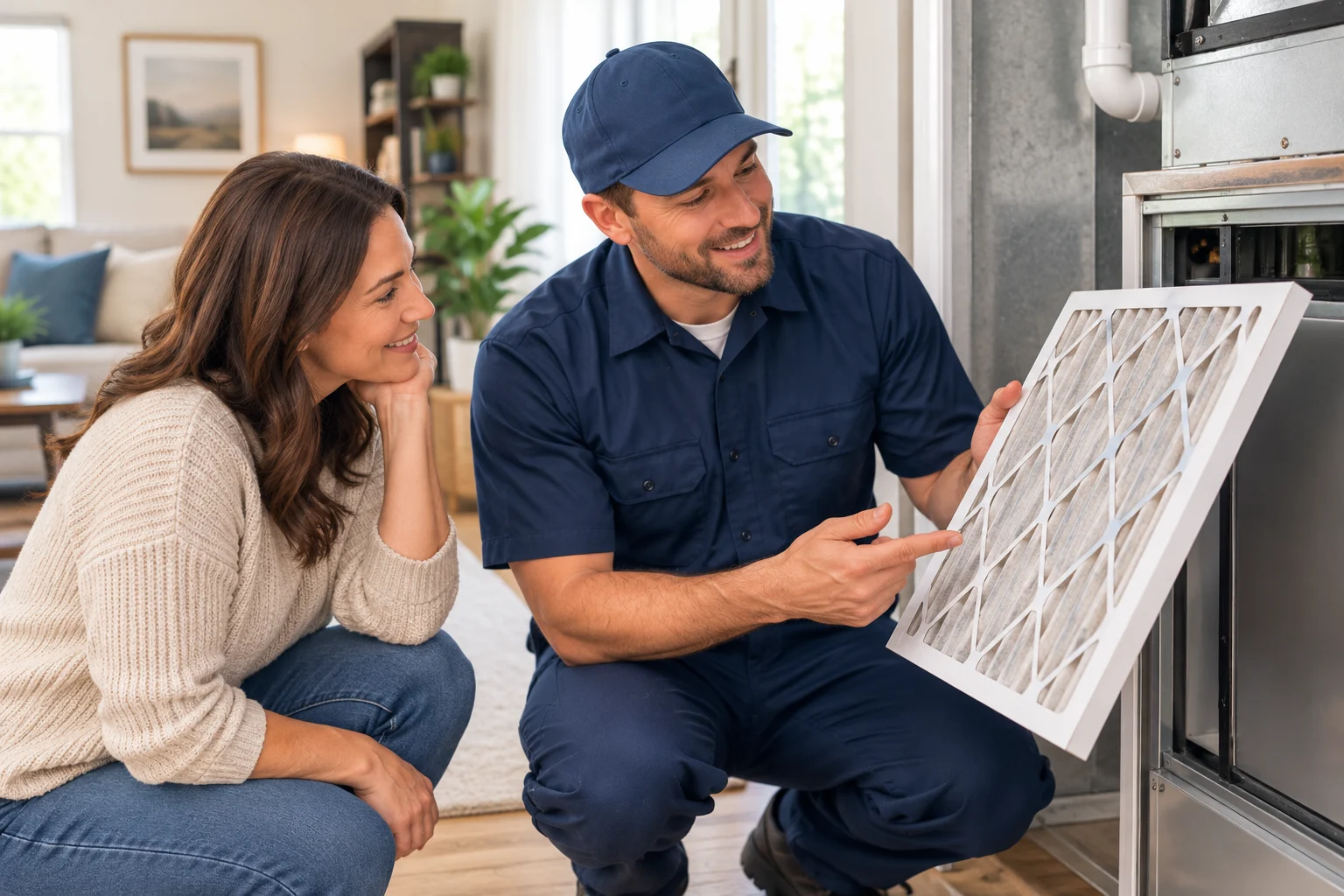
- Overheating from poor airflow. A clogged filter, closed or blocked registers, or ducts that are too small keep enough air from flowing across the metal, so it runs hotter than it was designed to. Over time it warps and splits. This is the most common and most preventable cause.
- Age and metal fatigue. Every cycle, the metal expands as it heats and contracts as it cools. After many thousands of cycles, stress points can crack.
- An oversized furnace or short cycling. A furnace that’s too big for the home heats up fast and shuts off often, adding more heat-and-cool cycles.
- Corrosion. Chemical fumes pulled into the burners, such as chlorine from pool chemicals or cleaners stored in a garage or closet near the furnace, can corrode the metal from the inside. On high-efficiency furnaces, a blocked condensate drain can also cause damage.
- Gas pressure or burner problems that put too much heat or flame against one spot.
Warning signs
A cracked heat exchanger doesn’t always give obvious symptoms, which is why yearly inspections matter. Signs to take seriously:
- A carbon monoxide alarm going off.
- Soot around the burners, the furnace cabinet or the vent.
- Burner flames that are yellow, lazy or flickering, or that jump, lift or change shape when the blower comes on.
- Rust or corrosion on the furnace’s metal parts or around the vent.
- An unusual burning, metallic or chemical smell.
- The furnace’s flame rollout switch tripping, so the furnace shuts down.
- Headaches, nausea, dizziness or tiredness in the home that improve when people leave.
How a technician checks for a crack
Finding a crack is genuinely hard. Some cracks are hidden deep inside the exchanger, and some only open when the metal is hot. The industry trade publication ACHR News has noted that no single test finds a crack 100 percent of the time, so a good technician uses several:
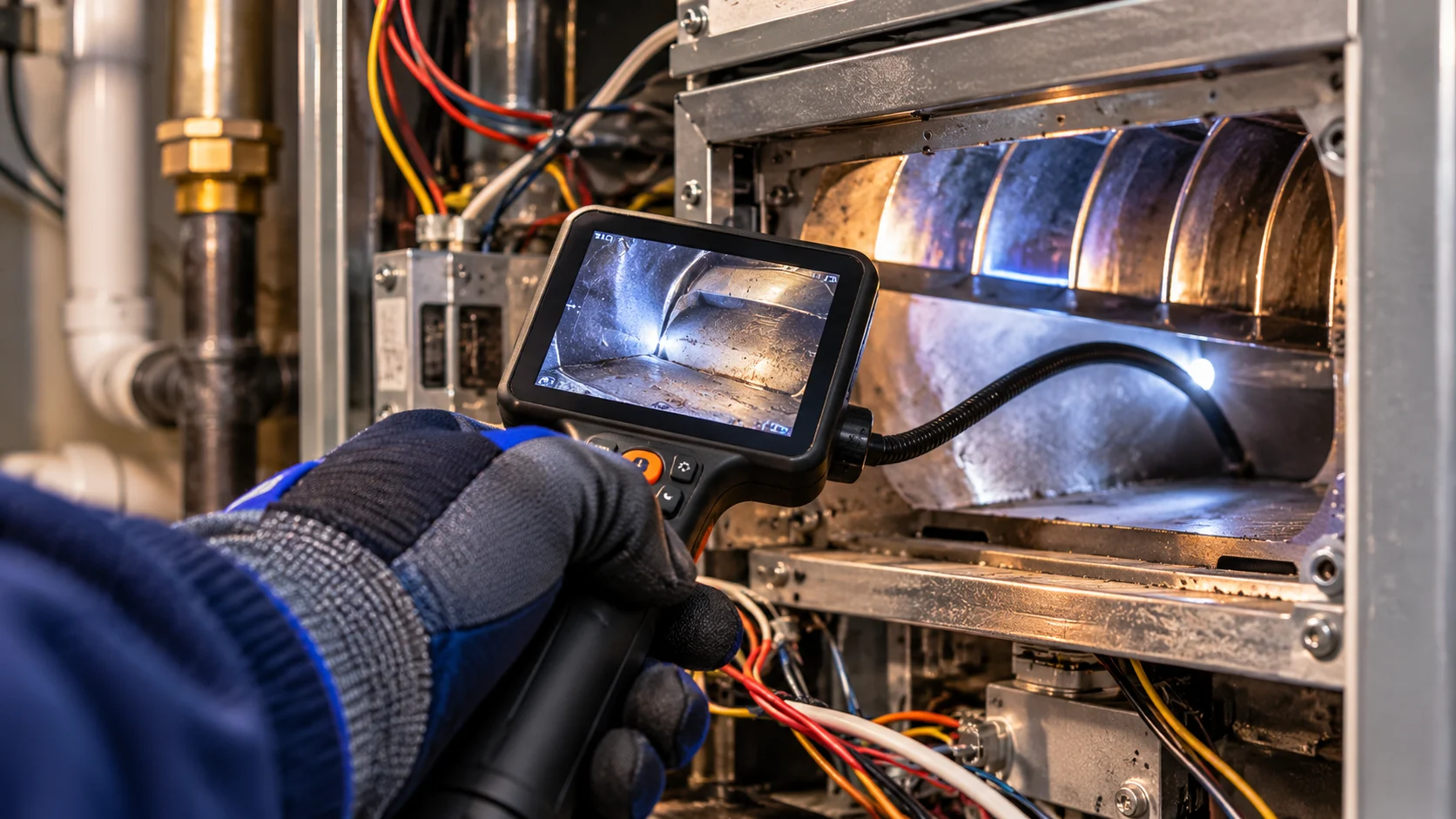
- Visual inspection with a light and mirror or a small inspection camera fed into the heat exchanger, looking for splits, holes, separated seams and heavy rust.
- Watching the flame when the blower starts. Air pushed through a crack disturbs the flame, making it roll, flicker or change color.
- Combustion analysis. A combustion analyzer in the vent pipe reads oxygen and carbon monoxide. A jump in oxygen or carbon monoxide the moment the blower comes on points to air mixing in through a breach.
- Carbon monoxide readings at the supply registers and in the room around the furnace.
Why it’s treated as a safety issue
A crack doesn’t always mean carbon monoxide is entering your home at that moment. But it means the barrier between combustion gases and your air has failed, and it can get worse quickly. Furnace manufacturers and gas utilities treat a cracked heat exchanger as unsafe to operate. A technician who confirms one will typically turn the furnace off and may tag it so it isn’t used until it’s fixed.
Your options if it’s cracked
- Replace the heat exchanger. Welding or patching it isn’t considered a safe repair. On many furnaces the heat exchanger carries a much longer manufacturer warranty than other parts, sometimes 20 years or lifetime for the original owner, if the furnace was registered. The part may be covered while the labor, which is substantial, usually isn’t.
- Replace the furnace. If the furnace is older (roughly 15 years or more), out of warranty, or has other problems, replacing it often makes more sense than paying heavy labor on old equipment. If you replace it, make sure the new furnace is sized with a load calculation and that airflow problems are fixed, or the new heat exchanger will face the same conditions.
Before you decide, find your installation paperwork or the furnace’s model and serial number. The manufacturer or the installing contractor can tell you what’s still under warranty.
How to protect your heat exchanger
- Change the filter on schedule. It’s the single best thing you can do.
- Keep registers and return grilles open and clear.
- Keep chemicals and anything flammable away from the furnace.
- Have the furnace inspected every year before heating season, including the heat exchanger and a combustion check.
- Keep working CO alarms on each level of the home and outside sleeping areas, and test them monthly.
Sources
This article is general information for homeowners. Every home and system is different, so have a licensed professional evaluate yours before making repair or replacement decisions.