Heating maintenance: getting your furnace or heat pump ready for winter
Your heating system sits idle for months, then gets asked to work hard on the first cold night of the season. A system that hasn’t run since spring is exactly the one that won’t start, or starts but doesn’t run safely. A little attention in the fall avoids both, whether your winters are mild or bitter.
This guide covers heating specifically. For the full-year picture, including the cooling side, see our article on preventive HVAC maintenance.
First, know which system you have
- Gas furnace: burns natural gas to heat air. You’ll usually find it in a basement, hall closet, garage or attic, with a metal vent pipe (or two white plastic pipes on high-efficiency models) leaving the cabinet.
- Heat pump: the outdoor unit that cools in summer runs in reverse to heat in winter. Inside, an air handler usually has electric heat strips as backup.
- Dual fuel: a heat pump paired with a gas furnace. The heat pump handles mild weather and the furnace takes over when it gets colder.
What you can do yourself
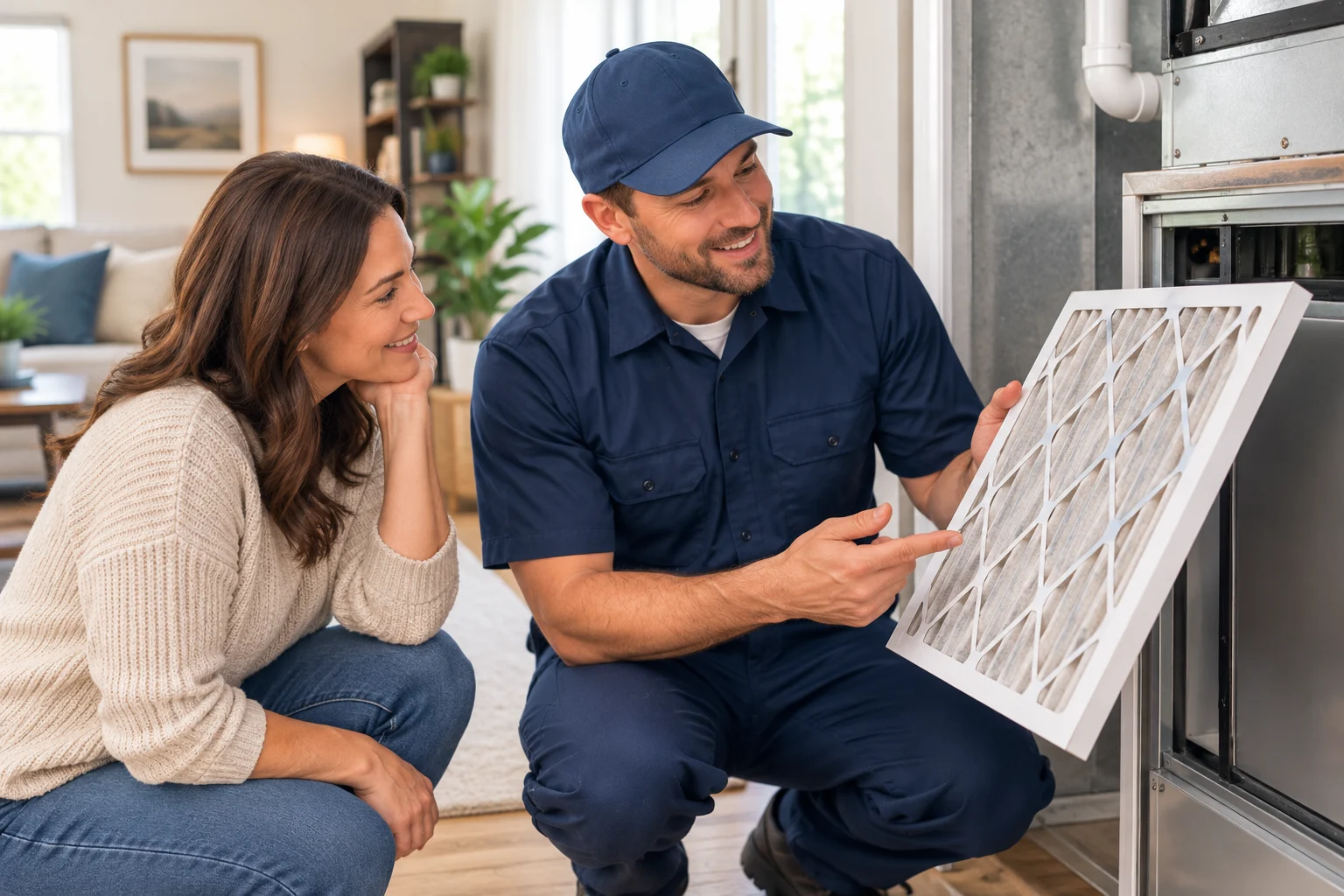
- Replace the air filter. A clogged filter is the most common cause of a furnace overheating and shutting itself off, and over time it strains the heat exchanger.
- Test the heat before you need it. On a mild day before the cold arrives, switch the thermostat to Heat and raise it a few degrees above room temperature. Warm air should come out within a few minutes.
- Expect a short burning-dust smell the first time. Dust settles on the burners and heat strips over the summer and burns off in the first few minutes. Open some windows, sensitive smoke alarms may be triggered. A smell that lasts longer than that, or smells like gas, is not normal.
- Clear the furnace area. Keep stored items, boxes and anything flammable at least a few feet away, and never store paint, gasoline, cleaners or pool chemicals near a gas furnace.
- Keep supply registers and return grilles open and uncovered. Closing too many rooms off restricts airflow and could cause the furnace overheat.
- Test your carbon monoxide alarms and replace the batteries. The Consumer Product Safety Commission recommends testing CO alarms monthly and having one on each level of the home and outside sleeping areas.
- For a heat pump, clear leaves, weeds and stored items from around the outdoor unit so it can pull in air and drain during defrost.
What a gas furnace tune-up should include
The Consumer Product Safety Commission, gas utilities and furnace manufacturers all recommend having gas appliances checked by a qualified professional every year. A real heating tune-up goes well beyond “it turns on.” A thorough technician will:
- Inspect the heat exchanger for cracks, rust and soot. This is the part that keeps combustion gases, including carbon monoxide, out of your home’s air. Our article on furnace heat exchangers explains it in detail.
- Check the burners and flame. A healthy gas flame is clear, steady and blue. A yellow, lazy or wavering flame, or a flame that changes when the blower starts, needs a closer look.
- Clean and test the flame sensor and check the igniter. These are the most common reasons a furnace tries to light and then quits.
- Measure the gas pressure and adjust it to the manufacturer’s specification.
- Measure the temperature rise (the difference between the air going in and the air coming out) and confirm it’s within the range printed on the furnace label. Too high usually means an airflow problem.
- Check the venting: the vent pipe should be tight, sloped correctly and clear, with no rust or disconnected joints.
- Run a combustion analysis where appropriate, reading carbon monoxide and oxygen in the flue gases.
- Test the safety controls: the high-limit switch, the flame rollout switches and the pressure switch.
- On a high-efficiency (90%+) furnace, clear the condensate drain and trap, which can clog after sitting all summer.
- Check the blower motor, clean the blower wheel if needed, and tighten electrical connections.
What a heat pump heating check adds
- Confirm the system switches correctly between cooling and heating (the reversing valve).
- Watch a defrost cycle. In cold, damp weather the outdoor coil can frost over, and the heat pump briefly reverses to melt it. A little steam from the outdoor unit is normal.
- Measure the backup heat strips. These are wired to large breakers and draw a lot of power, so loose or overheated connections are worth catching early.
- Check the refrigerant charge and clean the outdoor coil, since a heat pump works in both seasons.
Warning signs to call a technician now
- Your CO alarm goes off, or people in the home have headaches, dizziness or nausea that ease when they leave. Get everyone outside first, then call 911.
- Soot or black marks around the furnace, the burners or the vent.
- A gas smell, or a burning or electrical smell that doesn’t go away after the first few minutes.
- The furnace lights, runs briefly and shuts off over and over.
- Loud banging when the burners light, or new rattling and squealing.
- Water around a high-efficiency furnace.
- A heat pump that blows cool air for long periods, or an outdoor unit that stays iced over.
When to schedule
ENERGY STAR recommends checking the heating system in the fall. Early fall is ideal almost everywhere: contractors are past the summer AC rush and not yet into the winter no-heat calls, and you’ll find out about any problem before the first cold snap instead of during it.
Sources
This article is general information for homeowners. Every home and system is different, so have a licensed professional evaluate yours before making repair or replacement decisions.