Indoor air quality: what actually helps, and what’s mostly marketing

Indoor air quality is one of the most heavily marketed parts of the HVAC business. Some products genuinely help. Others are sold with big promises and little evidence. The EPA’s advice boils down to three strategies, in this order: control the sources of pollution, bring in fresh air, and filter what’s left.
1. Control the source
- Keep humidity in check. The EPA recommends keeping indoor humidity below 60%, ideally between 30% and 50%, to discourage mold and dust mites.
- Fix water leaks and condensation problems quickly, including a clogged AC drain line.
- Store paints, solvents and fuel outside the living space, and never idle a car in an attached garage.
- Have gas furnaces, water heaters and stoves checked so they vent properly, and install carbon monoxide alarms on every level of the home.
2. Ventilate
- Use bathroom and kitchen exhaust fans, and make sure they vent outdoors, not into the attic.
- Newer, tightly sealed homes may need mechanical ventilation to bring in fresh air. A qualified HVAC contractor can tell you whether yours does.
- Leaky return ducts can pull air from the attic, crawlspace or garage straight into your system. Sealing them is one of the most effective air quality upgrades and also improves efficiency.
3. Filter
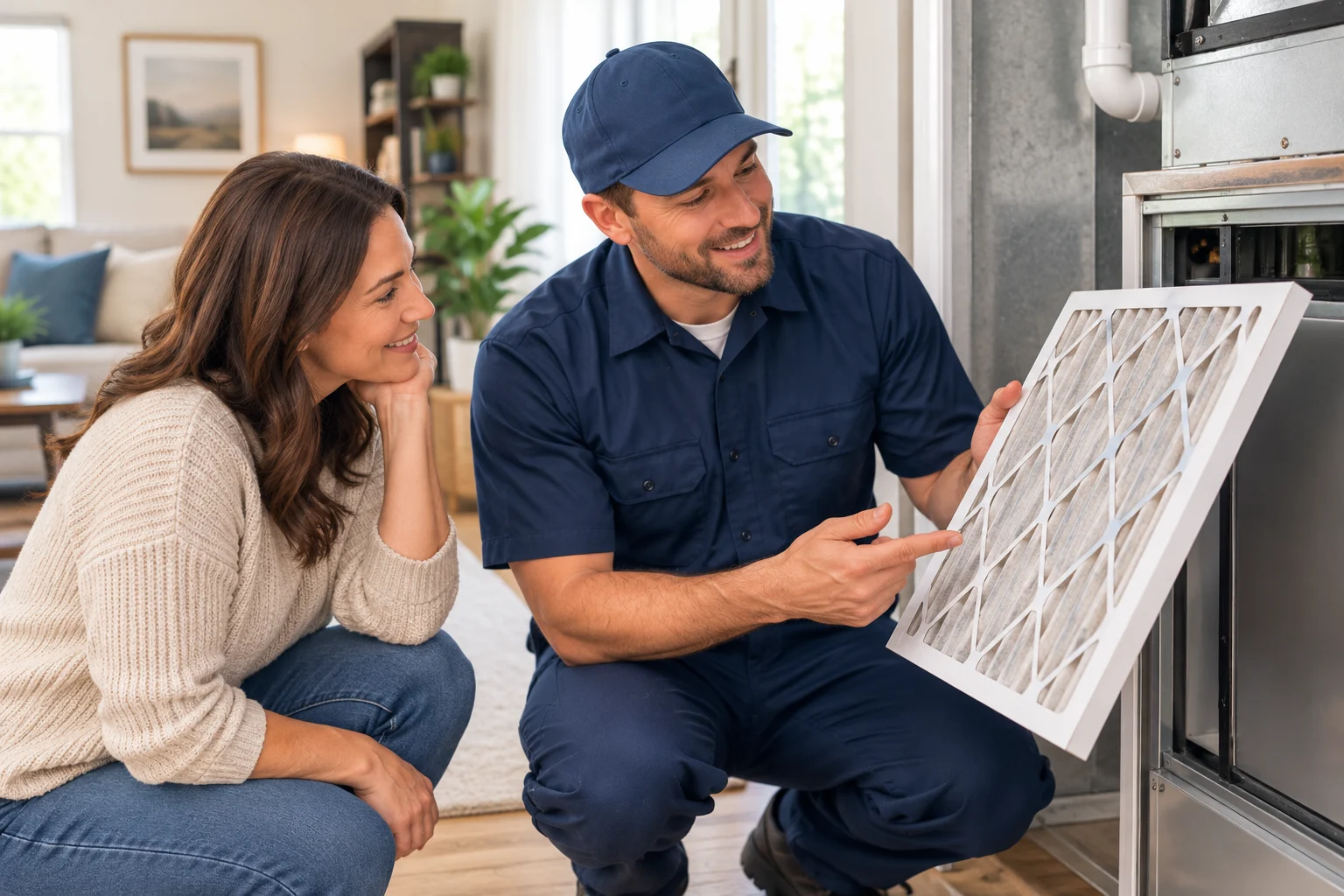
- Start with the right furnace or air handler filter. The EPA recommends at least MERV 13, or as high as your system can handle. See our filter guide for how to tell.
- For a bedroom or a room where someone has allergies, a portable air cleaner (HEPA) sized for the room can help.
- Filters only work when the system is moving air. Running the fan more often improves filtration but adds to your energy use.
Products to be careful with
- Ozone generators sold as air purifiers. The EPA says no federal agency has approved them for use in occupied spaces, and ozone is a lung irritant.
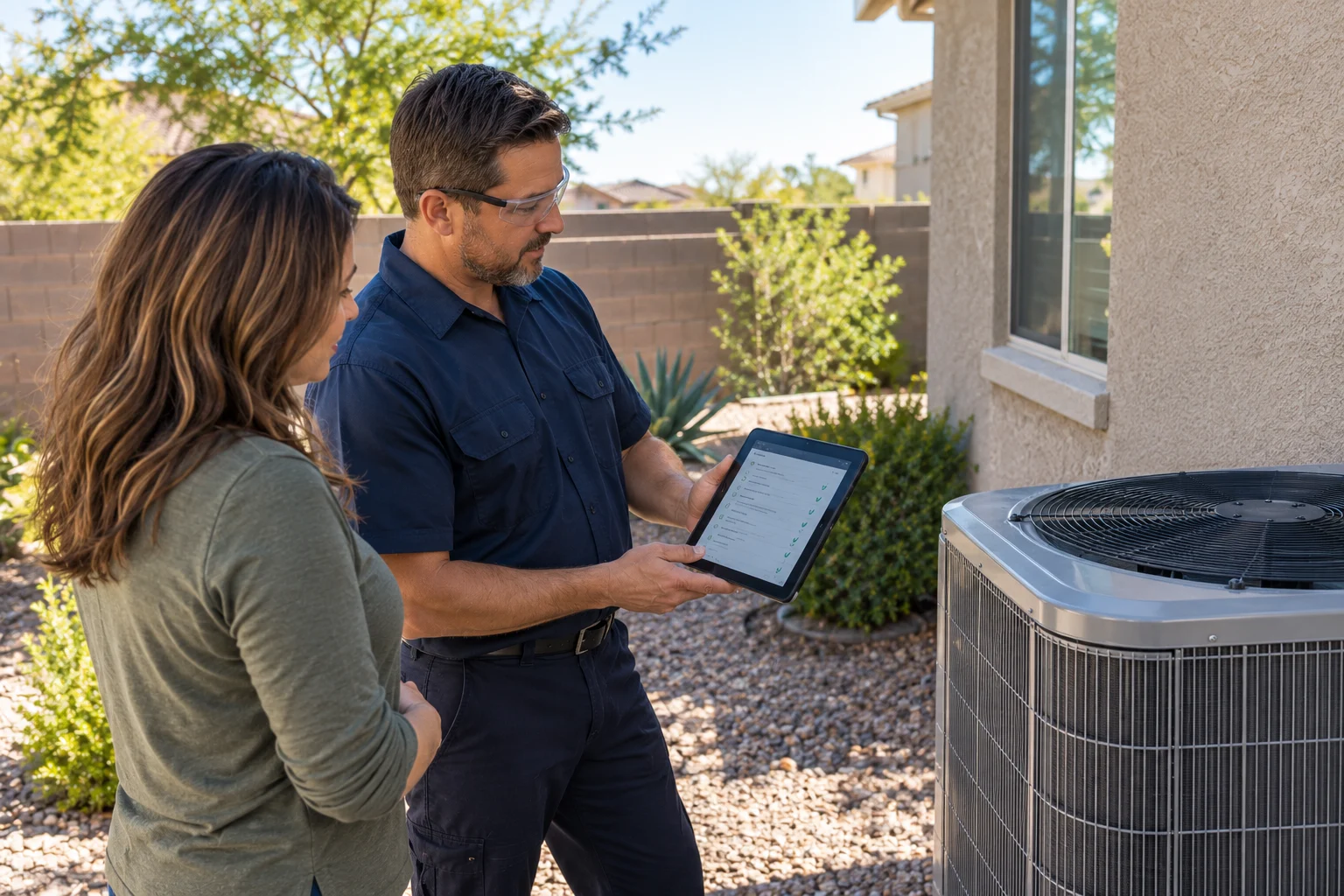
- Some ionizers, plasma devices, electrostatic precipitators and uncoated UV lamps can produce ozone as a byproduct. While inquring about these indoor air quality products from your preferred contractor, ask for independent test data, or check the California Air Resources Board’s list of certified air cleaners.
- UV lights installed at the coil can help keep the coil itself clean, but they are not a substitute for good filtration and ventilation.
- Routine duct cleaning. The EPA says duct cleaning has never been shown to actually prevent health problems. It recommends cleaning only when there is substantial visible mold, a pest infestation, or enough dust and debris that particles blow out of the vents.
When to call a pro
- Musty smells, visible mold on vents or around the indoor unit, or water where it shouldn’t be.
- Humidity that stays above 60% or rooms that always feel stuffy.
- A carbon monoxide alarm. Get everyone outside and call 911 or your gas utility right away; don’t wait for an HVAC appointment.
This article is general information, not medical advice. If you or someone in your home has asthma or allergies, talk to a doctor about what will help most.
Sources
- U.S. EPA: Guide to Air Cleaners in the Home
- U.S. EPA: Should You Have the Air Ducts in Your Home Cleaned?
- U.S. EPA: A Brief Guide to Mold, Moisture and Your Home
- California Air Resources Board: Air Cleaner Information for Consumers
- California Air Resources Board:List of CARB-Certified Air Cleaning Devices
This article is general information for homeowners. Every home and system is different, so have a licensed professional evaluate yours before making repair or replacement decisions.