Solar panel cost in Las Vegas (2026): what a system costs now that the tax credit is gone
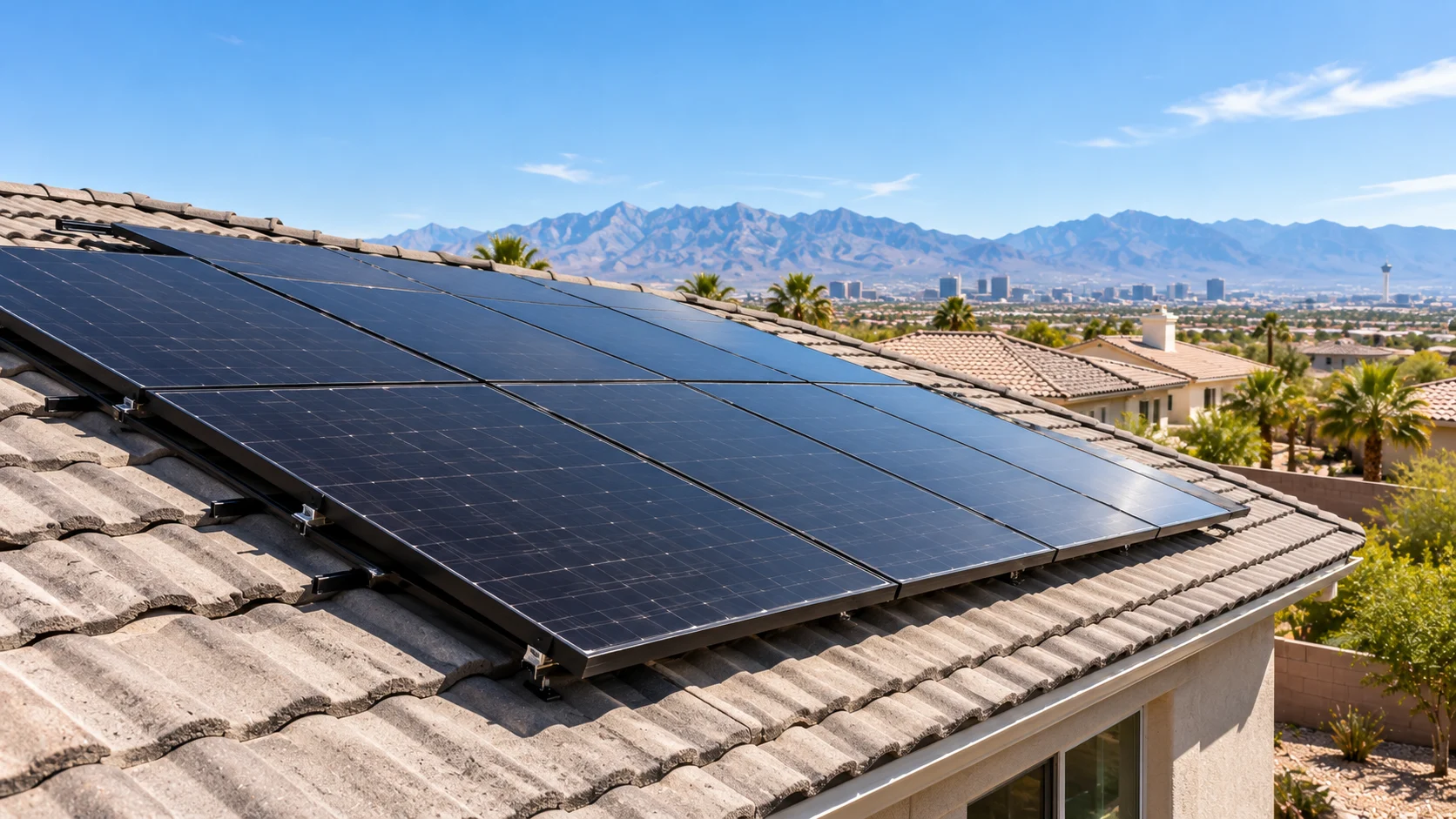
Solar in Nevada averages about $2.36 per watt installed. A typical 14 kW home system averages about $33,073 before incentives, with most between about $28,112 and $38,034. A home battery adds about $12,600 for a typical 13.5 kWh unit. The federal residential solar tax credit no longer applies to systems paid for after December 31, 2025, so savings estimates that still count it are out of date.
Typical prices in Nevada
| Item | As low as | Average | As high as |
|---|---|---|---|
| Installed cost per watt | — | $2.36 | — |
| Average 14 kW home system, before incentives | $28,112 | $33,073 | $38,034 |
| Home battery, per kWh of storage | — | $932 | — |
| Typical 13.5 kWh home battery | — | $12,582 | — |
Figures are 2026 Nevada averages from EnergySage quotes. They are not quotes. EnergySage estimates an average payback period of about 17.6 years in Nevada for solar panels; your results depend on cost, usage and financing.
What changed in 2026
- The federal residential clean energy credit (often called 25D) isn’t allowed for expenditures made after December 31, 2025. Older sales sheets and online calculators may still subtract 30%.
- Ask every installer to show the price with no federal credit, and to model savings using your actual NV Energy bills, not national averages.
How NV Energy credits your extra power
Solar panels make the most power at midday, often more than the house uses. Under Nevada’s current net metering, new customers are credited for power they send to the grid at 75% of the retail rate, a rate EnergySage reports is locked in for 20 years. Power you use at home as it’s made saves you the full retail rate.
That gap is why system size matters. A system sized close to your actual use, and running AC, pool pumps and other big loads during the day where you can, usually pays back faster than an oversized system that exports a lot. Confirm current rules and rate options with NV Energy before you sign.
Is a battery worth it?
- A battery stores midday solar for the evening, when you’d otherwise buy power, and can keep essentials running in an outage.
- At roughly $12,600 for a typical battery, it lengthens the payback period unless backup power matters a lot to you.
- Ask for quotes with and without a battery, and ask what the battery will power during an outage. Many don’t run central AC.
Check the roof first
Many valley homes have concrete tile roofs whose underlayment wears out in roughly 15 to 20 years. If yours is near that age, have a roofer look before you install. Panels have to come off and go back on for an underlayment job, which adds cost later.
- Ask how the installer mounts on tile: tile hooks or replacement flashed mounts, and what they do with tiles that break.
- Ask who is responsible for roof leaks around the panels, and for how long.
Cash, loan, lease or power purchase agreement
- Cash: you own the system and keep all the savings, but pay up front.
- Loan: you own the system. Compare the interest rate, dealer fees built into the price, and the total paid over the loan.
- Lease or power purchase agreement (PPA): a company owns the system and you pay monthly or per kWh. Read the escalator (how much the payment rises each year), the term, and what happens when you sell the home.
This guide isn’t financial or tax advice. Talk with a tax professional or financial advisor about your own situation.
What a good solar quote includes
- System size in kW, panel and inverter brands, and expected yearly production in kWh.
- Price per watt, total price with no federal credit, and any NV Energy or local incentives they assume.
- Roof work, electrical panel upgrades, permits and interconnection with NV Energy.
- Warranties for panels, inverters and workmanship, including roof penetrations.
- A savings estimate based on your own bills and the current 75% export credit.
Red flags
- Savings estimates that still subtract the 30% federal credit.
- Claims that you’ll “never pay NV Energy again.” You’ll still have monthly charges.
- Pressure to sign the same day, or a lease whose payment rises every year without that being explained.
Licensing
Solar systems in Nevada are installed under licenses such as C-2g (photovoltaics) or C-37 (solar contracting). Check the license on the Nevada State Contractors Board website.
Hiring a licensed contractor also protects you. If a licensed residential contractor fails to do the work properly on the single-family home you live in, the Nevada State Contractors Board’s Residential Recovery Fund can pay up to $40,000 per claim after other ways of recovering the money are used up. Claims are generally due within four years of the work. Unlicensed contractors aren’t covered.
Find local solar companies in the BookTheFix Contractor Directory.
Sources
- EnergySage: The cost of solar panels in Nevada (2026)
- EnergySage: Home battery storage cost (2026)
- EnergySage: NV Energy net metering
- Accounting Today: IRS FAQs on expiring clean energy tax breaks
- Association of Professional Reserve Analysts: Lifetime tile roofs, fact or fiction?
- Nevada Administrative Code, Chapter 624: contractor license classifications
- Nevada State Contractors Board: Residential Recovery Fund overview
This article is general information for homeowners. Every home and system is different, so have a licensed professional evaluate yours before making repair or replacement decisions.